Reflections on Death

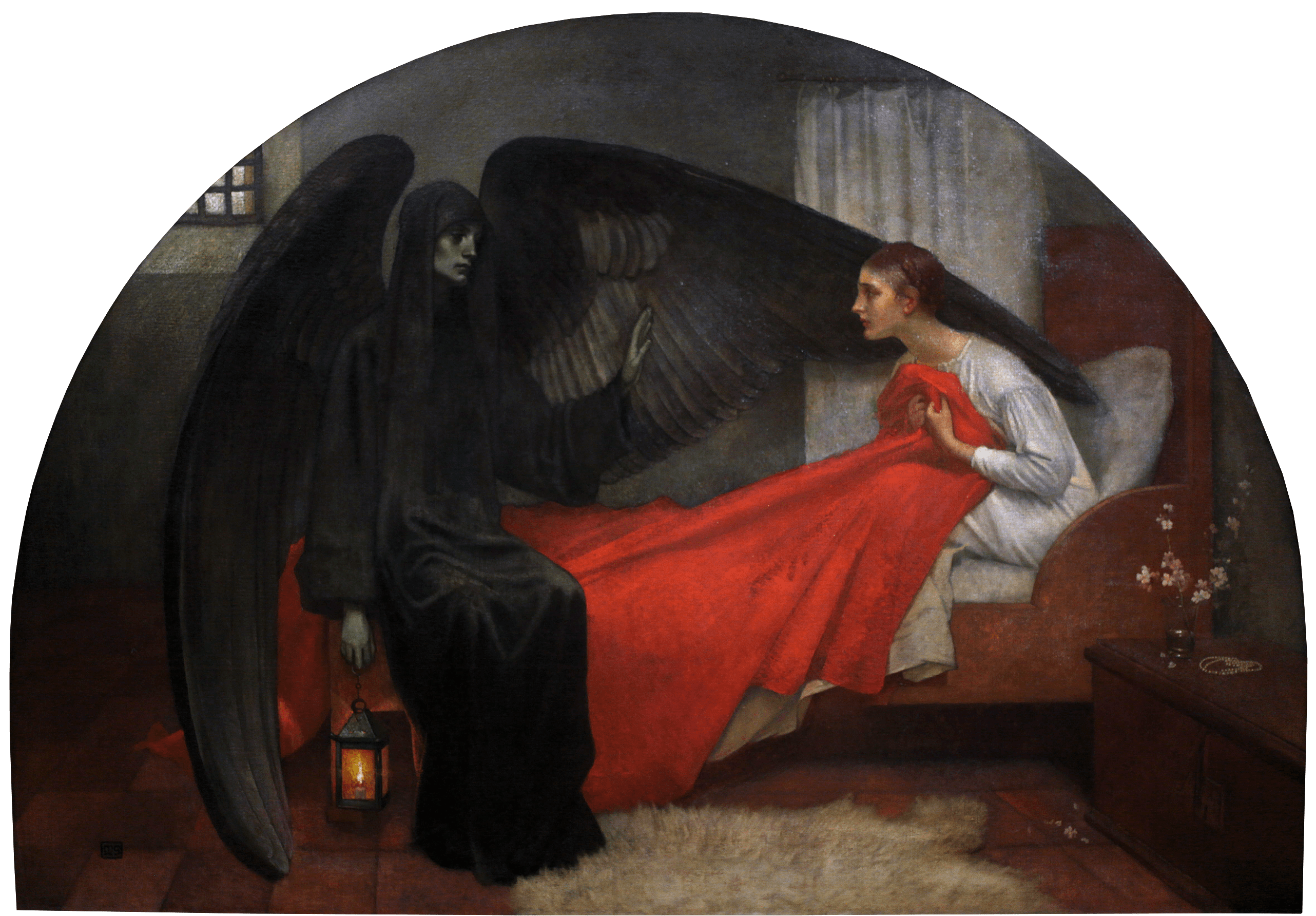
Near the end of 2025, I was thinking a lot about death. What does death mean? What is its purpose? Why does it exist at all? The thoughts paused over Christmas, but came back quickly with the death of my pastor this January. Originally, I think I was trying to find some silver lining in death because there have been a lot of deaths in my life and in my church in the last few years. Family members, friends’ parents, and pastors. When I started writing this, I made a list and explained the circumstances of each death, but it took too long to do properly.
Why I was thinking about death is not important, but I do think reflecting on death is important. It is important because you cannot reflect on death without also reflecting on life. Life and death are so intertwined from our perspective because there is no life that does not die. So when asking the question, what’s the meaning behind death, we are also asking, what’s the meaning behind life?
The passage that has been rattling through my mind the most over this topic is Deuteronomy 30. Forty years in the wilderness have come to an end. The Israelites are about to enter the promised land. Moses is reminding the people of the covenant they made with God and all the blessings and curses it entails. He concludes with this statement,
See, I have set before you today life and good, death and evil … I call heaven and earth to witness against you today, that I have set before you life and death, blessing and curse. Therefore choose life, that you and your offspring may live, loving the Lord your God, obeying his voice and holding fast to him, for he is your life and length of days. (Deuteronomy 30)
Life is life, and death is death. Life is good, and death is evil. They are not one and the same. They are not two sides of the same coin. Life is the ultimate form of goodness because it is good to simply be alive. That is why God is eternal and ever-present. He is the perfect good thing, so life is eternally in Him. Death is the ultimate evil. It is the absence of something that should exist; it is the absence of the good. This makes it more complete than the evil of sin.
The Hebrew and Greek meaning of sin is more like missing a mark; it is an archery term. Our sin is us trying to get the good things of God in an unvirtuous way. We try to be prosperous, something God considers a blessing, through greedy means. We try finding love and comfort with porn and meaningless sex. We try to make peace and justice in our anger. Sometimes we don’t miss the target by much. Sometimes we have no idea where the arrow even went. The further we stray away from the original good thing, the closer we get to death. But death is not only the absence of a target, it is also the absence of an arrow and an archer.
There is nothing in death which is good, because it is void of all things. It has no life or love within it. Which is why I have come to a grim conclusion that there is no silver lining in death. A silver lining implies that, in some small way, death is actually good. But that cannot be true. That is impossible. Does this mean life is only bleak if death is all that it leads to? Vanity, vanity, all is vanity?
I think Tolkien has the answer I’m looking for to this question, but I’ll need to paint a scene first. In the last book of The Lord of the Rings, our main characters, Frodo and Sam, find themselves in the heart of darkness – the land of Mordor. It is a desolate land, ruled by an evil deity, filled with stench and heat, and covered in shadow. A land with no memories of grass or water. Only dark looming mountains and orcs. In this hopelessness, Tolkien writes this,
There, peeping among the cloud-wrack above a dark tor high up in the mountains, Sam saw a white star twinkle for a while. The beauty of it smote his heart, as he looked up out of the forsaken land, and hope returned to him. For like a shaft, clear and cold, the thought pierced him that in the end the Shadow was only a small and passing thing: there was light and high beauty for ever beyond its reach. (J.R.R Tolkien, The Return of the King)
Life is best lived in the Shire – a green land filled with light and all that we love. But there are corners of the world that are dark places, and sometimes we have to walk through them. What do we have in these moments but hope? Hope that there is beauty, somewhere, untouched by darkness.
When I think of the darkest moment imaginable, I think of the day Jesus Christ was put to death. The Son of God, the living word, hanging on a cross, being mocked. The Jews, the Romans, all humanity, thought it better to crucify him than to let him live. Make the world absent of God by extinguishing his pure light. That was our plan. The darkness of that day is not to be understated with silver linings. How could humanity distance itself further from God?
And yet the light shone through all that darkness, clearer than ever before, in Jesus’ resurrection. And if He could do this with humanity’s darkest moment, how much more could he do it with our darkest moment? How could he not do it with our deaths as well? There is no silver lining in death – it really is as dark as it seems. But light has already triumphantly overcome it. The light, life, is too high and too beautiful to be touched by it. Now I am left with one more question. What do we do about grief?
Someone’s darkest moment in life might not be their own death. I’ve known people who have died at peace with God. Fear is not absent in them, but they know the light is just around the corner. Someone’s darkest moment could very well be the death of one they love. Grief is the price we pay for love. Where there is much love, there is much grief. This is true even if we know the person is in a better place. Why is this? Shouldn’t we just be happy for them?
Even Jesus wept at the tomb of Lazarus. Sometimes people will say, almost as if to excuse why he would cry, that he merely felt sad for the family and friends. But isn’t that why almost everyone cries at a funeral? Isn’t that still crying at death? Jesus cried at the death of Lazarus because death is a thing worth crying over. It is that black, void, pit. When someone we know dies, we are confronted with how black and empty of love it really is. It is forced in front of us. Dealing with our grief is learning what to do with that big black mass in front of us. What we have to do is look at it and fully understand the depth of its darkness.
This is why grief is different for all people in all situations. Sometimes we have seen the black before, and we know how to handle it. Sometimes there are too many new shades to study at once, so we look away and take it in slowly. Once we lean in and study the darkness in full, we will blink and stare at a white oasis. The light has broken through even this blackness. The love we thought lost was with us, inside us, all along, and will be carried with us all our days. The day we understand how the light can break through is not today. It might not even be soon. But one day we will have eyes to see. We will have to look up and survive on stars until then.
Heartbreaking, and beautiful. Thank you for sharing this.
This is beautiful Hundy. Thank you for helping us all to process our own questions by sharing your journey with yours. So grateful for that hope in the darkness